A nod to the past: Reimagining the Social Playbook
Social Media Management has become a staple of marketing teams over the past decade, with many companies expanding their social spending and constantly chasing the boom that is virality. However, the playbook is shifting, and it’s hard to ignore that TikTok and Instagram aren’t just dance videos anymore. They’re fully-fledged media stations with further reach than cable ever offered and more personalization than a viewer could ever dream.
Media today requires more complexity in the story than ever before. Sizzle reels and unboxing aren’t enough. So it might be time to dust off the old playbook for building a digital presence that people want to follow and look to blogs and newsletters of the past.
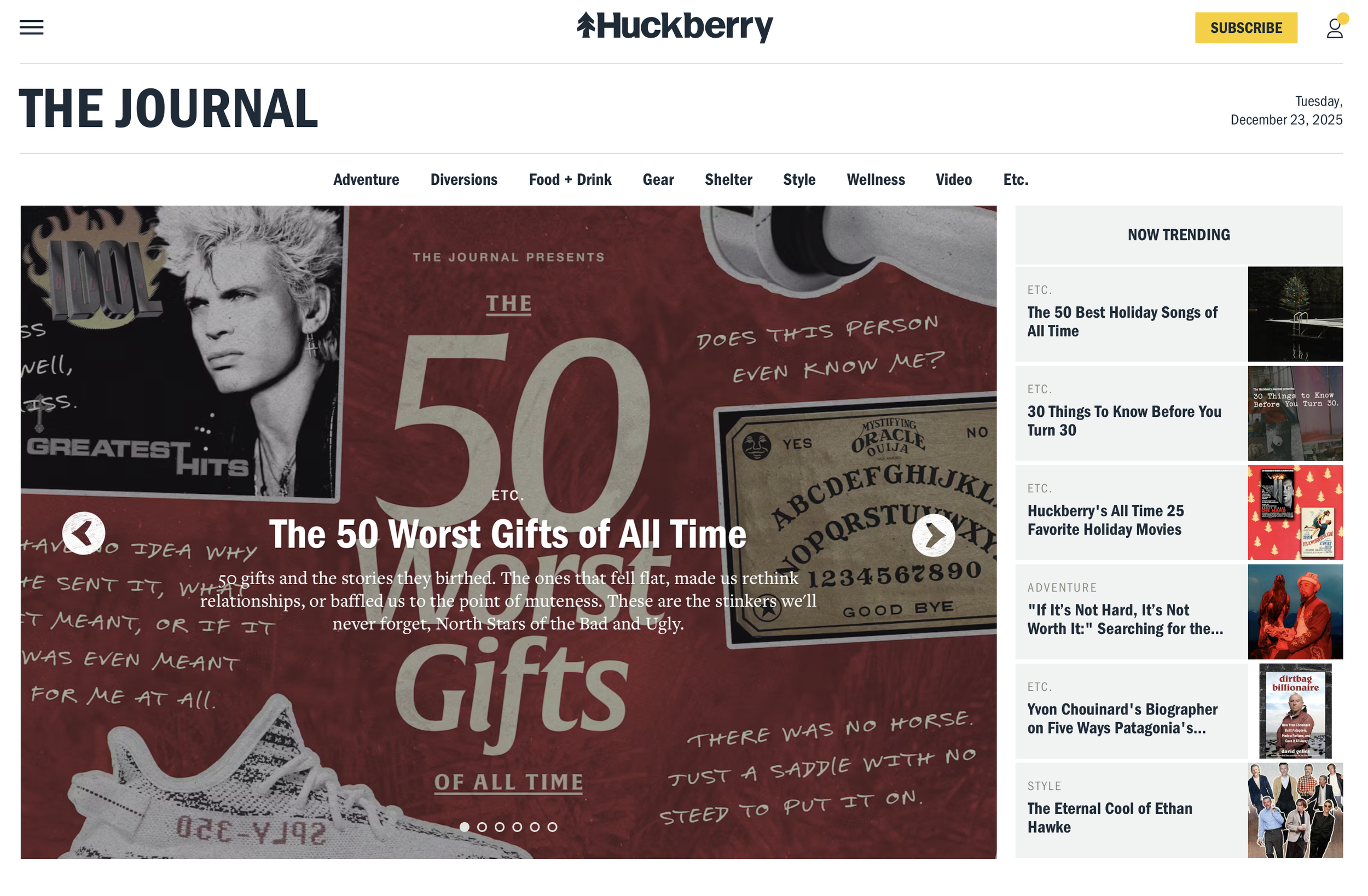
Back in 2010, blogging was a huge strategy to drive web traffic. While many brands focused on using buzzwords to drive SEO through their engagement. However, many brands took a more traditional approach, treating their blogs like their own newspapers, perfectly curated for the customers they wanted. Huckberry was a personal favorite. Their journal was something I looked forward to reading each week. Articles were well-written and well-tailored to my interests at the time. The same could be said of Mr. Porter, whose men’s style blog quickly surpassed GQ and Esquire as my default space for men’s culture. There was a golden age of written content being created by brands that worked hard to curate their audience, and the growth of these companies is proof of that working. However, the shift to video was something few brands were ready for.
Video requires far more work than any other art form. This is in part because it’s a marriage of all human arts put together. A good video starts with a good script but still requires visuals, sound, movement, and more to make it come to life. This has led it to be out of reach for many brands. So, social media managers filled the void. The focus of quick trends and viral moments took over, leading to quick gains in views and sometimes followers but rarely sustained engagement. On the flip side, we have a rise of DPs and art directors who are masterful at developing visuals, jaw-dropping scenes, and reels that are often lacking any sort of staying power. Recent brand videos are often just aesthetic montages but do little to make someone want to follow an account. While there is a time and place for this style of video, it’s important to ask the question when looking at your own brand’s page: Why would I want to follow myself? What about this page is adding value to my life? This is where the traditional media playbook excels.
Good media gives something back to the viewer. This can be catharsis, information, or pure entertainment. Regardless, it offers something. All too often, brand socials deliver none of this. So, where does this leave us? It’s time to rebuild the writers’ room and start focusing on seasons. Focus on a long-term growth strategy, videos that play out over the course of a month leading up to a brand launch. A recurring segment that pulls people in and makes them want to follow you. Or a collaboration with a creator whose focus is on telling a story or an idea. It’s time to stop chasing trends and focus on building out the voice of your company and who you want to attract with it. The beauty is the cost of production is going down. When I look through YouTube, I see smaller creators producing episodes with the same quality as network T.V. for 15 years ago. House Hunters could be shot on an iPhone, cooking shows equally simple. Whatever your brand is trying to attract, there is a way to build a narrative around it and create work that holds onto people.
So cheers to a 2026 that’s filled with story, and I look forward to helping you share yours.